
The Misalignment Report: Threads (Meta)
Built for Scale, Launched Half‑Baked
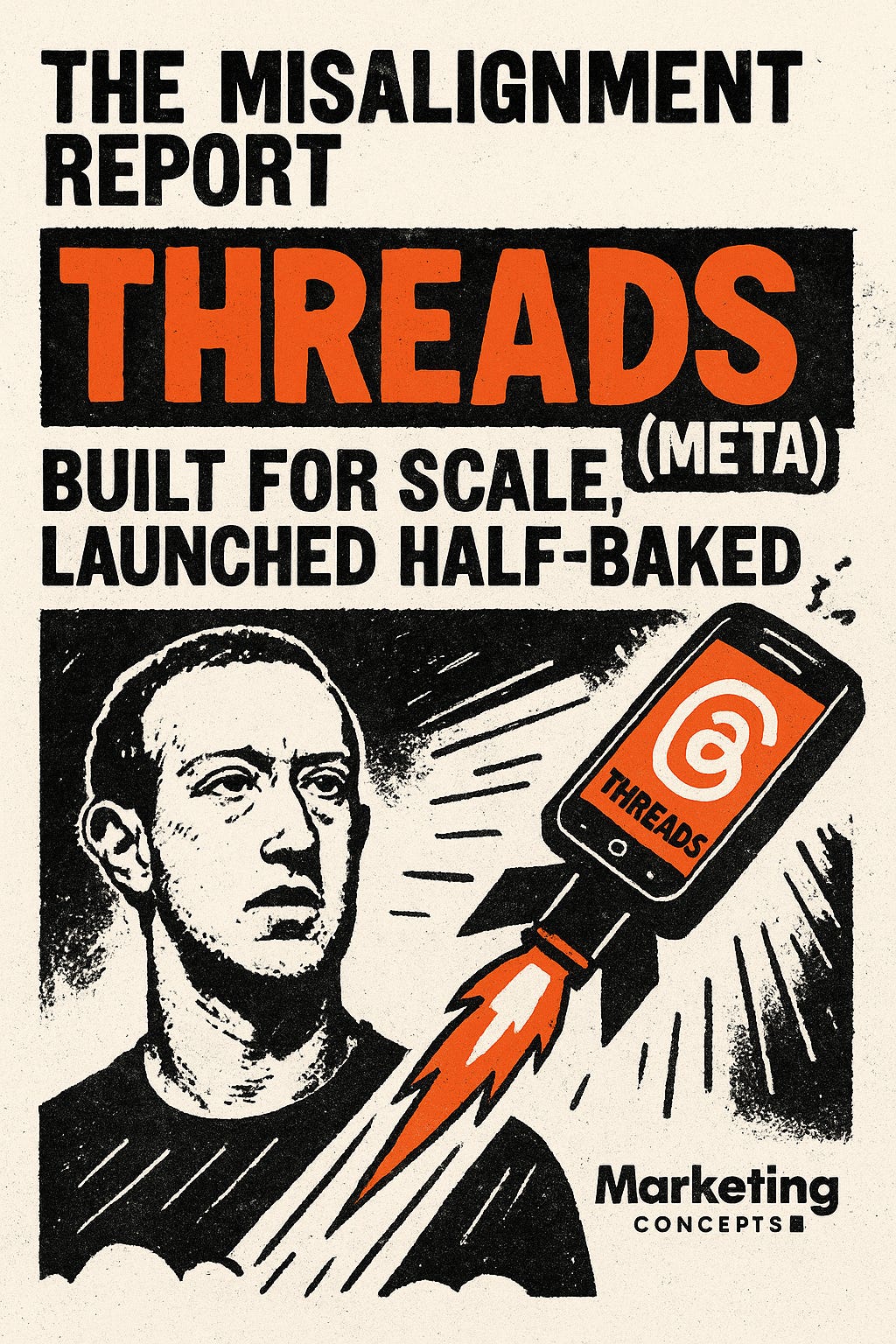
Threads launched on July 5, 2023, as Meta’s antidote to Twitter chaos—and it was pitched with maximum drama. The app promised:
“A calmer, more thoughtful platform for public conversation”
“Instagram’s friendlier text-based cousin”
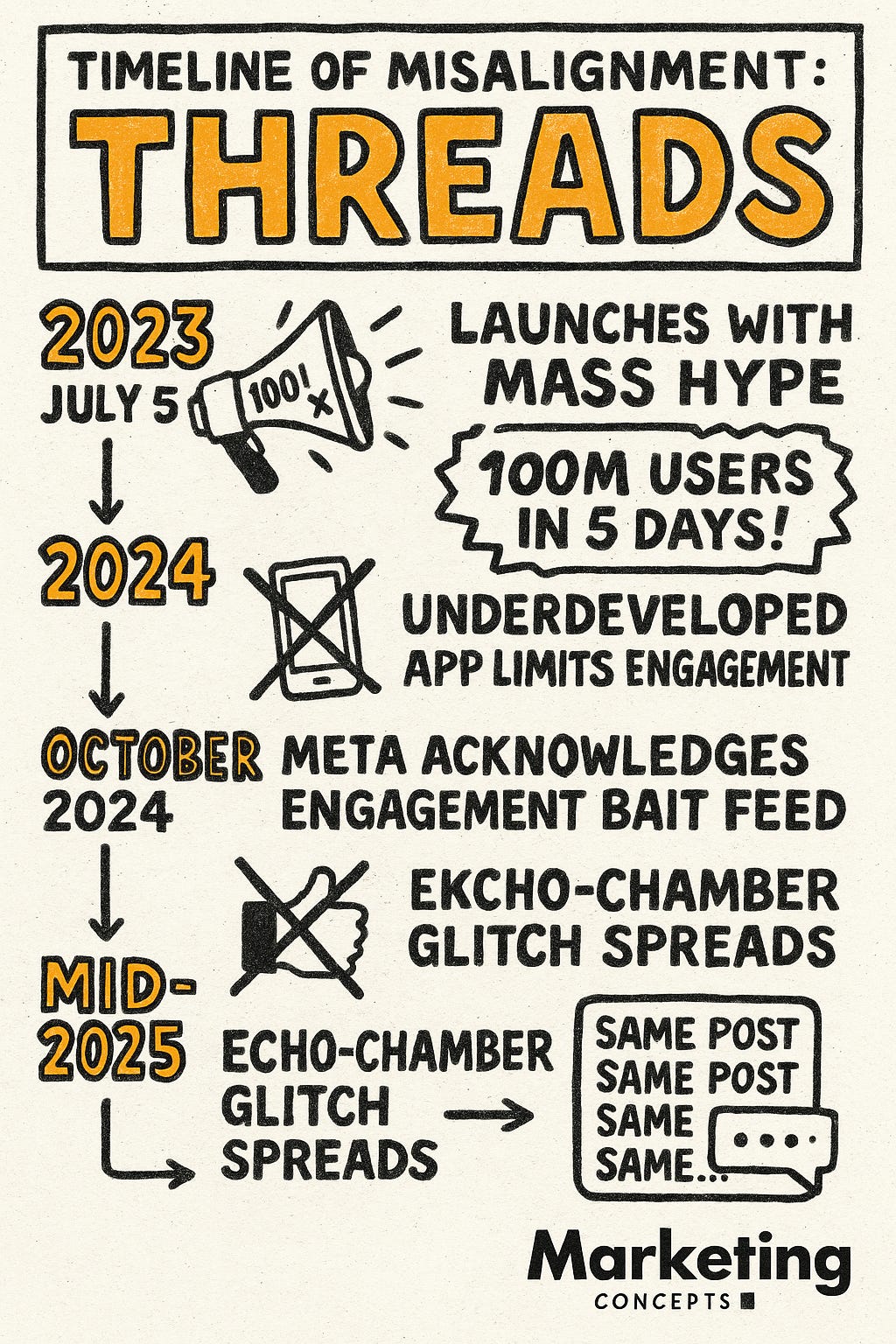
“100M users in 5 days”—the fastest app growth ever (until ChatGPT)
Meta’s official blog framed it as a breakthrough in social expression and connection.
The Reality Behind the Product
Under the hype, the app was barebones at best—and buggy by mid‑2025:
Missing core features: no search, no hashtags, no DMs, no trending topics or API access
Early disengagement: Daily Active Users dropped ~80% within weeks of launch
Glitch chaos: In June 2025, a bug transformed threads into literal echo chambers—users saw the same post repeatedly across their feed
Engagement bait backlash: Low-effort posts prompting dramatic replies dominated the “For You” feed—Meta acknowledged the issue via Adam Mosseri as of October 2024
Estimated Timeline of Misalignment
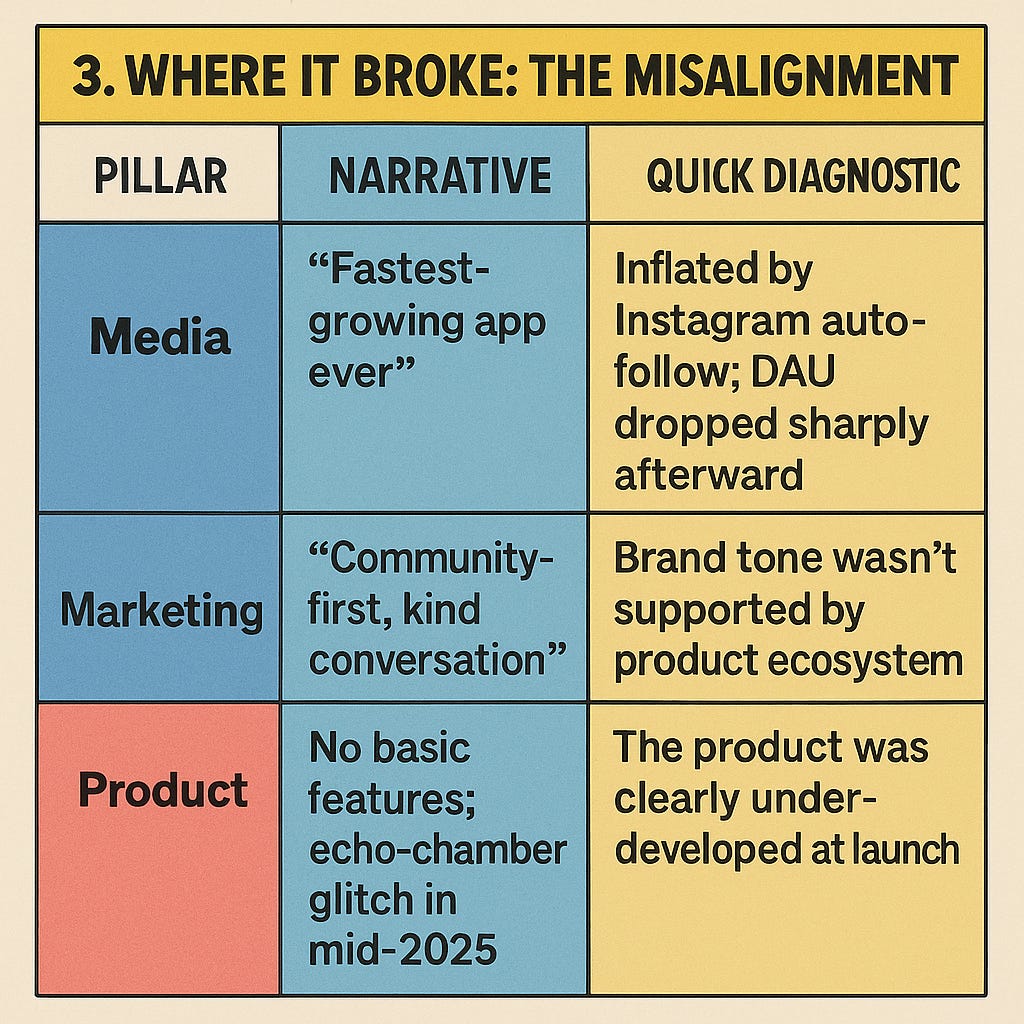
Where It Broke: The Misalignment
Strategic Implications
Threads leaned heavily on distribution—but ignored culture-making. It launched with scale, then leaned on hope that features and norms would follow.
Instead of nurturing conversation, they commodified it: Meta created an engine for replies and outrage, not discourse.
Glitches and algorithmic failures turned the dream of a measured public square into a noisy feedback machine.
Takeaway for Marketers
🧠 If your product doesn’t back up your promise, your narrative becomes exploitable.
Growth driven by scarcity or platform inheritance collapses without friction, retention, or agency.
Algorithms reward reaction—not rationale. Without guardrails, reaction becomes rage bait.
Bugs reveal the truth: if users are seeing the same garbage over and over, your product is broken—yet the media narrative keeps spinning.
Ask yourself:
Are you launching compelling content—or a viable product?
Is your narrative ahead of your architecture?
Can you resist scaling before you’ve earned engagement?
Trust isn’t transferred from Instagram—it’s earned through features, friction, and fidelity.