
The Omnichannel Operating System
This post follows Episode 7, where we explored Dynamic Frequency & Creative Orchestration. If you missed it, read EP07 here.
Why Campaigns Collapse
Campaigns don’t fail because of lack of ideas.
They fail because the system is fragmented.
Targeting in one silo.
Creative in another.
Media spend treated as “set and forget.”
Customer usage data ignored.
The result: impressions everywhere, growth nowhere.
What’s missing isn’t another tactic.
It’s an operating system that unifies spend, efficiency, and behaviour into one map.
The Growth Engine OS
Think of campaigns as an engine.
Fuel goes in (spend). Output comes out (growth).
What determines efficiency isn’t how much fuel you pour in, but whether the pistons, cylinders, and spark plugs fire together.
The Omnichannel OS is that system of coordination.
The Six Layers of the Operating System
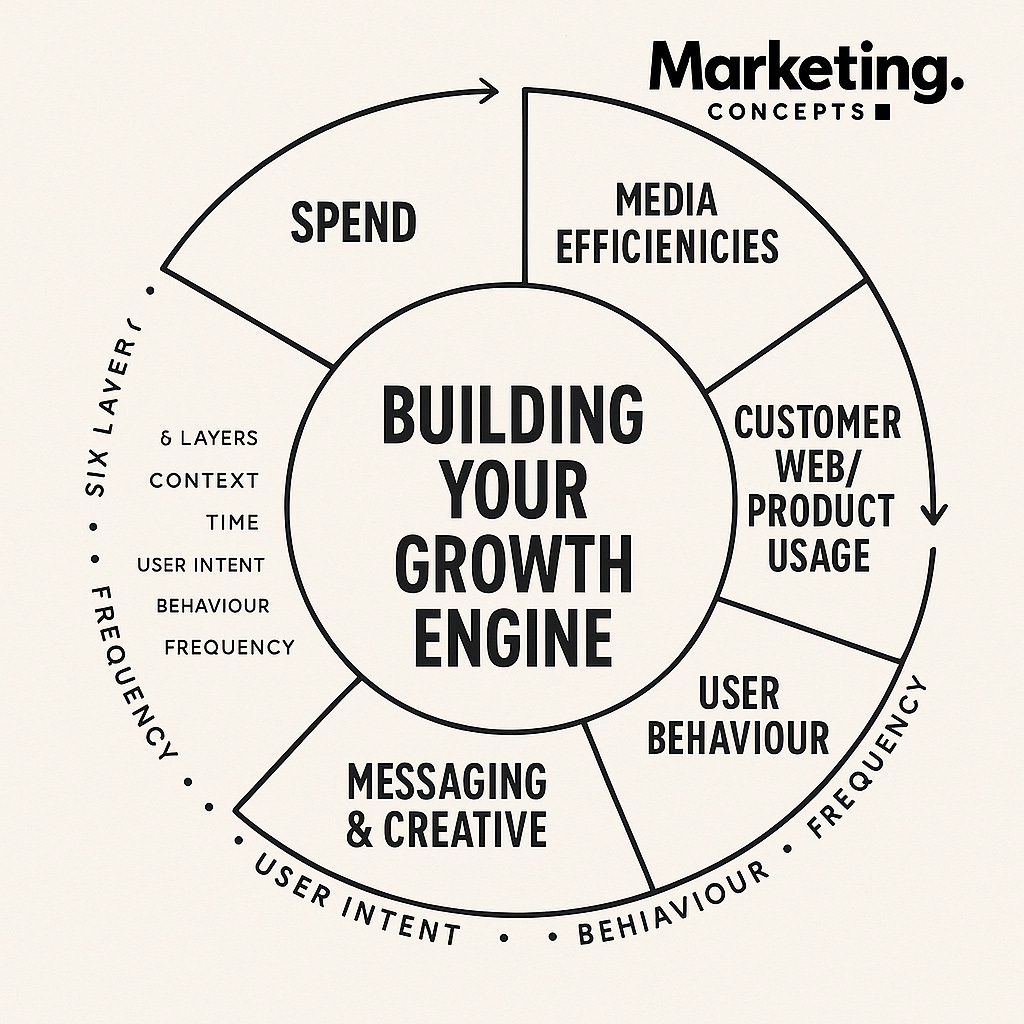
1. Audience Infrastructure (Inputs)
CRMs, CDPs, and data clean rooms as the source of truth.
IDs, pixels, and event streams mapped across channels.
Behavioural signals flowing in real time.
2. Spend Allocation Layer (Fuel)
Map budget by channel and audience segment.
Use efficiency benchmarks (CPM, CPC, CPV, CAC) to re-allocate dynamically.
Weight spend toward high-return journeys, not just broad reach.
3. Orchestration Logic (Rules Engine)
Define cross-channel journeys, not isolated placements.
Example: If CTV exposure → then mobile retargeting → then branded search.
Treat media as connected events, not silos.
4. Creative Fidelity & Rotation (Interface)
Anchor in a core promise.
Build modular assets tagged by stage, format, and version.
Rotate stories across frequency bands (awareness = intrigue, mid = proof, high intent = urgency).
5. Frequency & Efficiency as Rhythm (Cycles)
Measure not only exposures, but marginal efficiency: what’s the cost of each incremental conversion?
Plot curves to see when spend delivers diminishing returns.
Insert pauses where spend is wasted, reallocate where frequency drives lift.
6. Customer Usage Layer (Feedback Loop)
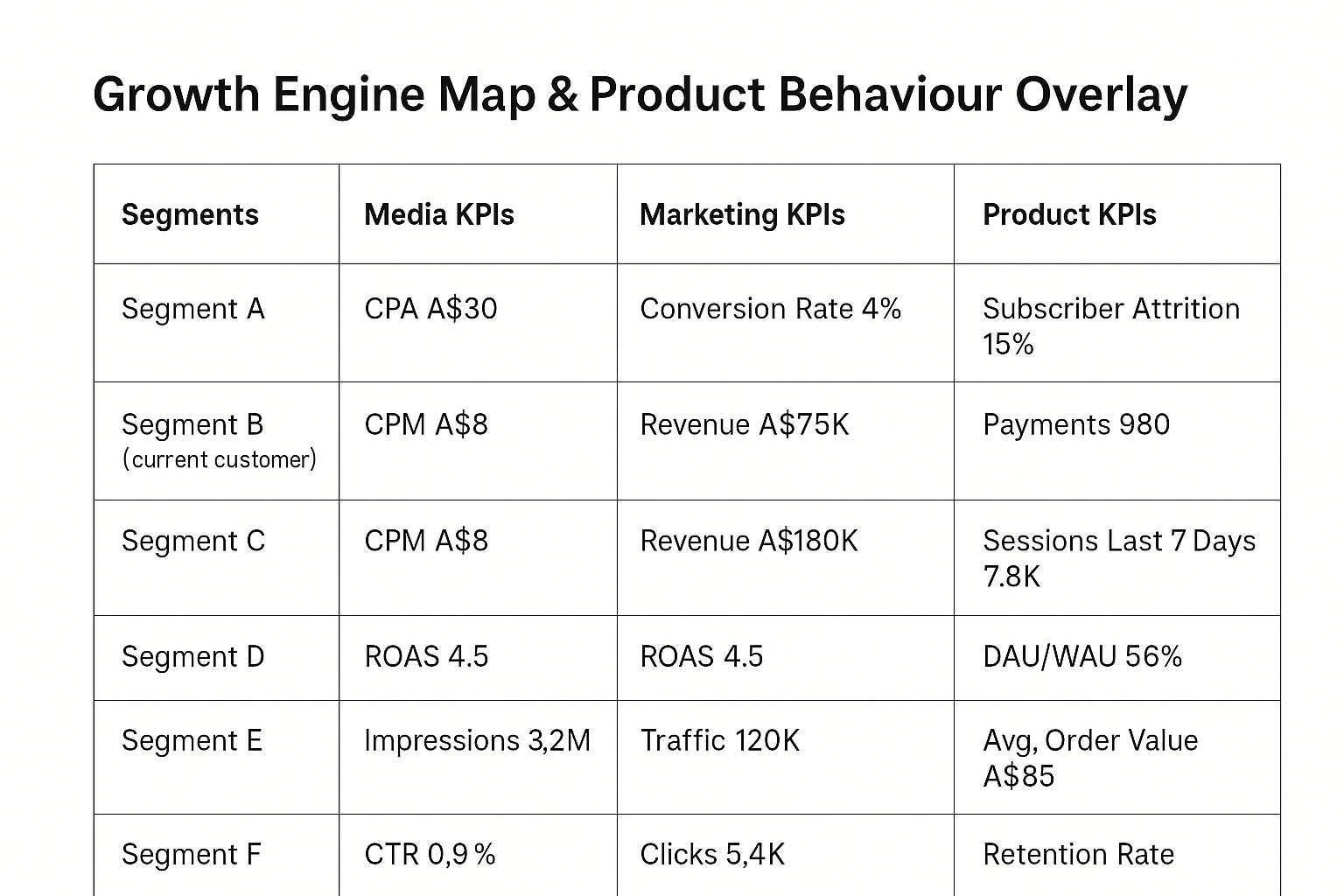
Feed product/web analytics (DAU/WAU/MAU, feature adoption, churn) into targeting.
Segment audiences by behaviour: new vs. retained vs. at-risk.
Connect media orchestration to product usage signals (e.g., push BVOD to churn-risk, search retargeting to power users).
The OS Playbook (Step by Step)
Audit Stack → List all tools for media, CRM, analytics, product usage.
Map Spend → Align budgets to journey stages, not just channels.
Benchmark Efficiency → Track CPM/CPC/CAC by audience, device, and time.
Plot Frequency Curves → Find sweet spots and waste points.
Overlay Creative Matrix → Ensure assets match stage + band.
Integrate Usage Data → Layer product signals into audience orchestration.
Automate Insights → Use GPT to clean exports, plot curves, and flag inefficiencies.
Re-calibrate Weekly → Adjust spend and creative rotation to new data.
Why It Matters
Media isn’t the growth engine.
Product usage isn’t the growth engine.
Spend alone isn’t the growth engine.
The engine is the system that unites them —
where spend fuels journeys, creative sustains attention, frequency sets rhythm, and product usage closes the loop.
That’s when campaigns stop being campaigns —
and start being operating systems for growth.
Next Episode: EP09 — The Performance Renaissance
We’ll explore how measurement is evolving: from vanity metrics to memory metrics, from attribution to econometrics.